


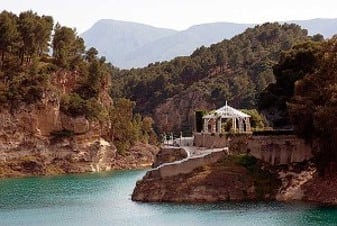
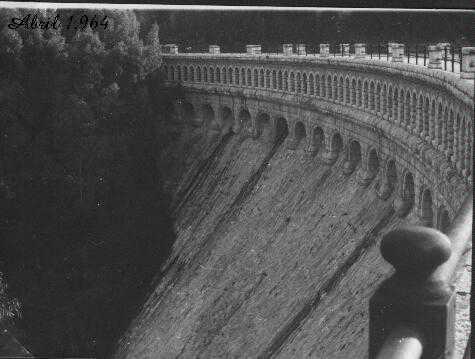
In the early 20th century, Málaga’s electricity supply depended on two foreign companies, which generated electricity using steam engines. Two of the leading families of Málaga’s industrial bourgeoisie, the Lorings and the Heredias – who were related to one another – were the driving forces behind a business venture that culminated in the construction of the El Chorro Reservoir, known since 1953 as the Conde de Guadalhorce Reservoir.
It was none other than the first Count of Guadalhorce, the engineer Rafael Benjumea Burín, who realised that the province’s industrial development depended on the construction of a power station capable of generating sufficient electricity.
Rafael Benjumea was married to Isabel Heredia Loring, whose cousin, Jorge Loring Heredia, had been granted a licence in 1901 to develop hydroelectric power on the River Guadalhorce. In 1903, Jorge Loring, Rafael Benjumea and Francisco Silvela (who was also married to a Loring Heredia) founded the Sociedad Hidroeléctrica de El Chorro, with a capital of two million pesetas, the aim of which was to generate electricity without relying on any foreign capital.
Explore the area around El Chorro
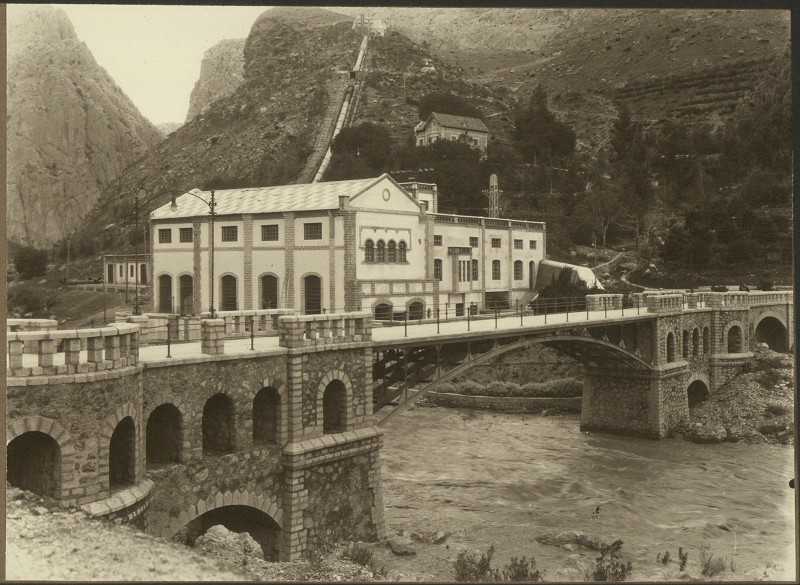
The initial idea was to harness the El Chorro waterfall, a drop of around one hundred metres on the River Guadalhorce. Three power generating units with a capacity of 3,000 CV were installed. The El Chorro power station was completed two years later, in the summer of 1905. All the electricity generated had already been sold in advance.
Despite the promising start the company enjoyed, its early years were fraught with difficulties. On the one hand, in order to guarantee a regular supply to its customers, it needed to expand its facilities with a large reserve power station, and the company was not financially strong; on the other hand, an unfortunate succession of calamities left the company in a critical situation: in 1905, two of the founders, Francisco Silvela and Jorge Loring, died, which led to a significant loss of confidence among creditors and bondholders; in 1907, torrential rain caused a stream to burst its banks, eventually flooding the power station. No sooner had they managed to repair the flood damage than a fire destroyed the facilities.
To overcome these financial setbacks, Rafael Benjumea had to sell most of his family’s assets, and his wife’s family increased their contribution to the business to the point of selling one of their most cherished properties: the Finca de la Concepción.
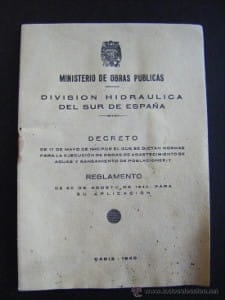
The severe flooding that struck Málaga in 1907 led to the creation of the Southern Spain Water Authority, established to prevent disasters and ensure the efficient use of water for irrigation. Rafael Benjumea envisaged building a reservoir on the River Turón that would store enough water to irrigate the entire Guadalhorce valley and guarantee electricity generation.
Under the 1911 Act on Subsidies for Waterworks, Benjumea could arrange for the State to cover up to 50 per cent of the cost of the works. However, for this to happen, the irrigators themselves had to apply for the works and contribute 10 per cent of the cost. Benjumea demonstrated great powers of persuasion and organisation, as he was able to carry out the laborious task of contacting the farmers and completing the necessary bureaucratic procedures so that, in 1914, the State and the Guadalhorce Agricultural Union could sign the deed for the construction of the El Chorro Reservoir.
A Public Works Board, under the Ministry of Public Works, was responsible for administering the funds provided by the State and the irrigators. Rafael Benjumea was the engineer who drew up the plans and supervised the works, which began in 1914.
El Chorro Reservoir today
More than a century after its construction, the El Chorro Reservoir remains a landmark not only for its historical and engineering significance, but also as one of the most visited natural destinations in the province of Málaga. Today, the reservoir combines its heritage with a wide range of recreational and active tourism activities that attract visitors from far and wide.